
Where I come from
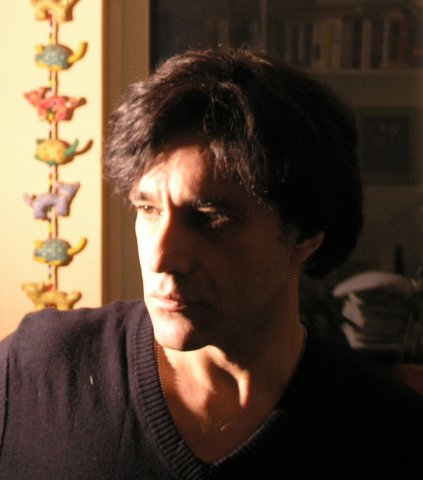
?My dear friends thank you so much for the opportunity you gave me to be here in your wonderful city and to talk to you
Greek literature
Odysseus Elytis, the Greek poet who was awarded the Nobel Prize for literature in 1979, included the following paragraphs in his acceptance speech:
Dear friends, it has been granted to me to write in a language that is spoken by only a few million people. But it is a language spoken without interruption, with very few differences, for more than two thousand five hundred years. This apparently surprising spatial-temporal distance is found in the cultural dimensions of my country. Its spatial area is one of the smallest, but its temporal extension is infinite. If I remind you of this, it is certainly not to derive some kind of pride from it, but to show the difficulties a poet (and I would say a writer in general) faces when he must, to name the things dearest to him, make use of the same words as did Sappho, for example, or Pindar, while being deprived of the audience they had and which then extended to all of human civilization.
If language were not such a simple means of communication this would not be a problem. But it happens, at times, that it is also an instrument of "magic." In addition, in the course of centuries, language acquires a certain way of being. It becomes lofty speech. And this way of being entails obligations.
30 years have passed since Elytis’s speech and a lot of new things have happened both to the world and to Greek Literature. Now we have internet, e-books, we even have haikus in the form of sms form.
Contemporary Greek literature is too diverse in its concerns, styles, and directions to be described neatly. The characteristic of this generation of contemporary Greek writers is precisely its fierce resistance to classification. However, contemporary Greek writers are much more likely than writers of previous generations to write books that are set outside Greece.
Though from its very beginning (Homer, Herodotus) Greek literature ventured beyond the boundaries (admittedly always fuzzy) of the Greek world, the approach of most writers when writing pieces that took place outside Greece has largely been that of a “stranger in a strange land.” The two newest generations of Greek writers (those who appeared between 1980-1995 and the most recent one are the first to have truly broken the national boundaries and produced works that are placed either extensively or fully outside Greece. Having grown up with the universal constants of international music, with international cinema and television, and, now, the internet, this generation is often driven by the need to explore the multiple and complex dimensions of being “citizens of the world” (the fundamental meaning of the term “cosmopolitan”).
Certain Greek literary critics have recently observed that the young Greek writers who appeared on the scene after 1980 seem to have consciously disassociated themselves from the literary tradition of Greece and the experiences of previous generations. These literary critics believe that this liberation is still too recent to mark a positive shift in the historical memory, or to prevent the exaggerations of a
?freedom that is experienced primarily as the negation of every form of categorization. They consider there to be a “lack of reality” in contemporary Greek literature and an absence of weight and depth in the experiences recorded in it.??????Without disagreeing with the general outlines of this sketch, I believe that the important thing is to focus on what led this new generation of Greek writers to “skip over” tradition, and also led to the innate refusal of this particular generation to “be categorized.”?An important Greek director once said that the older generations were “princes of half things, while today the new kids are princelings of much smaller fragments.” The new generation of writers—roughly those who were born in or after 1960—lived the most important events of our recent history as reflections. In the decade of the 80s, the youngest representatives of this generation appeared for the first time with a youthful, direct way of writing, speaking about things that mattered to their generation. These writers expressed exhaustion from the heavy historical weight they had inherited.?But the even younger generation had the privilege (?) of “coming of age” during the technological revolution, marked by globalization and the opening of new means of communication. The writers in this generation travel, live abroad, read foreign literature perhaps even before they read Greek literature, first wrote on computers, surfed the internet from a very young age. Part of a generation that, unlike the previous, has no “visible enemy” (though of course the “enemy” is now everywhere present, invisible—and, even worse, rather appealing), these writers found themselves suddenly in a brave new world where “isms” ceded their place to the three ws.?The writer is a creature who thirsts for inspiration. When suddenly the whole world is right there on his desk, or when it’s possible for him to go out and meet it, there’s no way he’s going to ignore that invitation. I believe that whatever distancing we have seen of young writers from “tradition” isn’t a result of a need to commit patricide or a devaluation of the past. It was, rather, the natural result of such a rapid expansion of possibilities. The distance from the village streets to the stadium of the universe is great—and maybe sometimes it makes you forget that the rules of the game are still the same.??The critics are right when they say that historical circumstances helped the new generation make a clean, bloodless break. Every fundamental disruption presupposes a bloody price to pay. And of course we can’t forget that we live in a country where nostalgia for the past is practically in our genes. What the Greek really longs to do is to speak of his past. In an era in which western societies (particularly Protestant ones) place so much emphasis on finding oneself, it’s natural for Greek society, which is based on continuous, “mass” institutions—family, political parties, friend groups, Orthodoxy—to react to this sudden, individualistic “flight toward the unknown.” A “flight” that is naturally bound up in all of the problems that arise when you’re suddenly given a free ticket to countries that once seemed so far away.?At the same time, these changes coincided with the commercialization of the book and the newfound pressure of the market, which of course made its mark on the literary world as well. Greek literature is taking its first steps as a marginal European literature with, of course, its various peculiarities. The reflexive insubordination of young Greek writers—which, in my opinion, is a perfectly healthy response—now needs to find its authentic way of being. It should, in other words, combine the ecumenical conditions that gave rise to it with the specific place in which developed.?As Greeks we’re Balkans, on the border between East and West. This double lineage is something we should put to good use. We shouldn’t isolate it, and we shouldn’t constrict it. We should embrace it. We should make comprehensive use of our lineage without letting it become the thing that characterizes us. We should be citizens of the world, having incorporated all strains of our lineage, all points of origin. Personally, as a writer, I find that travel, the journey, rejuvenates the images I produce, strips my gaze, fascinates me. Our great author Nikos Kazantzakis was very right when he said: “The journey is the tenth Muse…”?It’s time, now, that after a long period of introversion, the Greek novel seems to be spreading its wings in what we might call the globalized environment. At the center of this new stance or inclination is no longer only the historical setting, the Hellenism of the diaspora or the recent Civil War that followed
??the Nazi occupation. The “lost spring” has emigrated from the old haunts of our East and is spreading itself over a new geography…?My own work: fantasy and reality?“All novels are really metaphors of reality,” John Fowles said. Writing fiction is not an escape from reality, it is a plunge into it. Even “magic realism,” a term coined by the Venezuelan writer Uslar Pietri, and excellently expressed in literature by such figures as Gabriel Garcia Marquez and Juan Rulfo, is nothing more than a heightened reality. The Real is anything that can happen. Either in life, or in the mind.?A novel is, in a sense, a construction. And as such, it obeys certain laws. These laws are not, of course, those of everyday life–although they are not so distant from it. A character in a novel is believable–or, I should say, real–if he can act according to these laws. If he does this successfully, he acquires a unique property: he is able to literally do whatever his creator wishes… Let’s take as an example a famous short story by Kafka, “The Metamorphosis.” This is the first paragraph.?One morning, as Gregor Samsa was waking up from anxious dreams, he discovered that in bed he had been changed into a monstrous verminous bug. He laid on his armour-hard back and saw, as he lifted his head up a little, his brown, arched abdomen divided up into rigid bow-like sections. From this height, the blanket, just about ready to slide off completely, could hardly stay in place. His numerous legs, pitifully thin in comparison to the rest of his circumference, flickered helplessly before his eyes.?From the first line we are already transported into a world beyond the borders of reality, into the realm of fantasy, science fiction, the absurd, allegory - you name it. A man wakes up as a bug? This is not stuff someone can easily relate to. However, as we continue reading, we are able to follow this story with ease and to enjoy it. That is because the author establishes the terms of our encounter from the beginning. Kafka starts by offering the reader a specific, bizarre, concrete statement. Samsa wakes up transformed into a bug. This assertion seals the contract between writer and reader. We almost immediately identify with poor Gregor and read the rest of the story, thinking, fantasizing about him as a monstrous bug jailed in a room. Throughout the story Gregor obeys the rules the author has set out from the beginning. In order to write intriguing fantasy, and in order to be believed, Kafka has to be strictly attentive to every concrete detail.?All fiction is an illusion, but it has to be a believable one. If, in order to describe what you see, you are obliged to send your hero back in time, make him speak from the dead, or transform him into a bug–well, that’s okay, as long as you make it believable.?Personally, as a writer, I am often concerned with the border between fantasy and reality. Eighty percent of my novels?Like a Thief in the Night?and?Kill Your Darlings?take place inside the protagonist’s head. In the first book the hero is an actress who undergoes a kaleidoscopic mind journey to fictitious places, a descent into a bizarre world that brings a number of buried secrets into light. Falling into a carefully-prepared--I hope-- narrative trap, the reader is led to believe that all these mysterious things actually happen to the protagonist in reality, only to be shocked at the last chapter, when it is revealed that the past 250 pages of the book were just a dream, a hallucination, a fantasy. In the second book,?Kill Your Darlings?the hero is a screenwriter and the strange things that happen to him are stories he creates in his hospital bed--bits and pieces he sees whilst he lies in a semi-coma after a near-fatal heart attack.?I just said the reader is shocked. But is he really? Why? Because he suddenly realized that what he read wasn’t?“real”? But hang on a minute: at the time?he was reading it, he believed it was actually happening. He remembers actions. And that is what matters. Reality is what is remembered. In life too, remembered things are not reproduced in the mind exactly as they have been experienced. The mind, memory, is not a digital camera, it is a chiaroscuro painting.?We writers write about what we see, either with our eyes or with our soul. The night I realized I wanted to become a writer, I was at a pub in London, sipping a beer and looking at the indifferent scene in front of me. This scene, this “plan” – as the French would put it - involved everyday sounds
?and images: trees, parked cars, people passing by, a dog, moist whispers from the leaves, a distant voice. Suddenly I understood that this trivial canvas contained everything. I tested the image I was seeing against all values, all notions, all questions, and all ideas that sprang into my mind - however crazy, over –he-top or surrealistic they might have been. The “plan” contained all the answers. This accidental canvas reproduced the world, both in its reality and its fantasy.
Later, as I started to work as a novelist, I understood that what the writer actually does is an editing job. The writer is an editor of chaos. When I say chaos, I don’t mean disorder, but an uncharted space that contains emotions, loss, memory, conflict, reality and fantasy, a space that is a direct reflection of the universe. But the writer is at the same time a shepherd of clouds – clouds being the ideas, the feelings, the sentiments, the stuff of life. He guides the clouds in such a way that he permits them to be in a state of continuous free movement as well as of constant alert. The writer is the spectator who follows their movement and chooses the one that interests him most. This movement becomes the writer’s world.
In everyday life, we are at times drawn into situations in which there are no clear borders between fantasy and reality. How then can we expect clear, definite boundaries in an art that only exists in minds and on paper? Fantasy and Reality are the two faces of Janus, inseparable and knitted together as one. “Reality,” as Will Blythe said, “is largely created by the observer, which makes it an awful lot like - well – fiction.” Fantasy is actually a means of extending, bisecting, transforming, and editing this reality, in order to return to it.
And fiction, literary creation, is this “Other way to see,” as Emily Dickinson brilliantly said; it is “another gaze” at the world, a gaze that interprets reality with fantasy and fantasy with reality, an imaginative construction with truth as its basic element.


